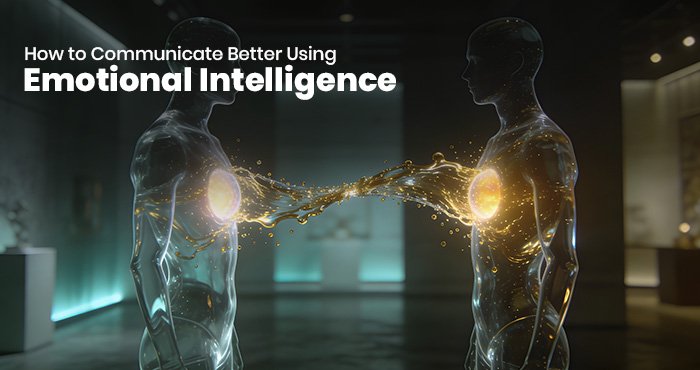
The common belief among most people is that communication skills mean verbal skills. However, one needs to understand that the worst conversations ever have taken place between people who had the best communication skills. The gap here lies not in words but rather in awareness. This awareness makes emotional intelligence play a critical role in bridging the gaps by altering the way we speak, listen, and leave our audience after a conversation.
Emotional intelligence is not something one requires for communicating like a therapist or counselor. One only needs to take their time and pay closer attention to conversations before responding to them. This will definitely revolutionize your approach to conversations, whether at home, in the workplace, or with friends.
Words Are Only Part of the Story
One such thing is that most individuals do not usually take note that just a fraction of our message is actually transmitted through words. Most of the message is delivered through the way you tone it, the way you use your body, the timing of your delivery, and the energy you bring to the discussion. Two people can say the same sentence but mean totally different things.
Emotional intelligence communication starts the moment you walk into a conversation. It is asking you to pay attention not only to what you are saying but also to how you say it. Are you nervous? Are you distracted? Do you begin thinking about the next thing that you will say while the other person is speaking? Such subtle behaviors affect all of our interactions, whether we realize it or not.
The Art of Actually Listening
Most people think they listen. But real listening, the kind that makes someone feel truly heard, is actually quite rare. Active listening skills mean you are fully present. Your cell phone isn’t in your hand anymore. Your gaze is on the other person. You’re not composing a response while he’s still talking. No, you’re just listening to him without any judgment or distractions.
There’s a reason why a person feels comfortable opening up when another listens to them. The individual becomes relaxed. He starts being sincere. He drops his guard and opens up. It’s then that meaningful conversations begin, not when one tries to prove their point in an argument. Active listening skills are the foundation of that safety, and they are something anyone can build with practice.
Why Empathy Communication Changes Everything
The word empathy is often heard in daily discussions; however, very few people understand the true meaning of an empathic conversation. It does not imply that you have to agree with the person. It only means that you try to put yourself into their position. You try on their shoes for some time, regardless of whether your experience of yours and theirs is similar.
Some empathy communication includes such simple phrases as “It sounds difficult” or “It makes sense that you were upset about it.” Though they might seem to be simple phrases, the meaning behind them is huge. They show the other person that you support them, pay attention, and care about their feelings. It is amazing how rarely we do that nowadays.
Social Intelligence — Reading the Room Before You Speak
Do you remember walking into a conversation only to realize that there was some problem within it? Or have you ever made a comment in a group that resulted in an instantaneous shift in its dynamics? The phenomenon that you observed, in such instances, is called social intelligence. It is essentially the skill to understand other people, comprehend circumstances, and modify your behavior accordingly.
A socially intelligence individual is not the same throughout all his interactions. He will address a grieving acquaintance and an officemate quite differently. Such individuals are aware of when to be forceful and when to be compassionate. They are capable of sensing silent antagonisms and refrain from bringing them out into the open. All this is possible without the need for any premeditated preparation since it relies on observation and empathy toward the individuals in question.
Small Habits That Help You Improve Communication Skills
The great thing is that there is no need to completely change your whole personality for yourself to communicate better. Little, but regular changes in how you approach conversations will create a significant change over time. Below is a list of several useful habits to develop:
Take one breath before answering – especially when you’re upset.
Ask, rather than assume – “What was your meaning behind this?” works better than a wrong assumption.
State your emotions instead of accusations – “I feel neglected” sounds much nicer than “You always leave me out.”
Adapt your energy to the situation – not all conversations require high energy or a fast solution. These habits, done daily, quietly improve communication skills in ways that most people will notice before you even do.
How This Shows Up at Work Every Day
There is an abundance of miscommunication in the workplace. Not because workers are not competent at what they do, but because few have ever learned the art of communication from an emotionally intelligent perspective. A manager who offers his feedback without regard for the feelings of those around him creates a whole department where employees fear making mistakes. An employee who cannot resist butting into other people’s conversations leaves everyone feeling ignored.
Emotionally intelligent communication at work starts with the selection of your words, your willingness to listen even to the unpleasant truth, and your ability to create an environment in which others can openly share their views. Emotionally intelligent leadership in the workplace involves leading meetings with full awareness of others’ emotions, offering constructive feedback without making the receiver feel attacked, and dealing with conflict without letting emotions get in the way.
Conclusion
You don’t need a course, a certification, or even years of experience to begin communicating differently. All it takes is a choice to become aware – now – to listen first, feel first, respond thoughtfully. This is emotional intelligence in its purest essence.
For those who wish to delve further into this path, Secrets of Emotional Intelligence by Max Jameson is an exceptional source of wisdom. The Max Jameson emotional intelligence teachings are not just intellectual; they are practical, tested, and applied to ordinary life. Learn more about the book below, and learn how to communicate in a way that truly makes a connection.
See also the influence of emotional intelligence on relationships and how to cultivate EQ for insights into applying this practice in your daily life.
FAQs
How does emotional intelligence help with communication?
Emotional intelligence helps you notice your own emotions before speaking. In addition to making you a better listener, this practice will help you understand how others are feeling and allow you to pick the right words. It will also make you more understanding and build better relationships with people.
What are the best ways to practice active listening skills?
First things first, put away your cell phones when talking to someone. Look them in the eye, acknowledge them with nods when appropriate, and refrain from interrupting them mid-conversation. Active listening skills also include asking follow-up questions to show you genuinely care about what is being shared.
What does empathy communication look like in a real conversation?
Empathy communication looks like acknowledging someone’s feelings before offering advice or solutions. Acknowledgments like “I totally get why that was difficult for you” or “I completely see what you mean” do wonders in making someone feel heard.
Can social intelligence really be developed over time?
Yes, absolutely. Social intelligence grows the more you practice paying attention to people — the reactions, the body language, the tone of voice. This skill will develop rapidly once you learn to observe others without passing judgment.
What is the fastest way to improve communication skills using EQ?
Rapid change is made possible by one single behavior: taking the time to stop and think before you react. Just that brief moment will allow you to evaluate your own emotional state, as well as that of the person on the receiving end, and select an appropriate reaction that will be truly beneficial for the dialogue. Couple this with daily practice of EQ behaviors, and progress will soon follow suit.